
What Is Generative Engine Optimisation (GEO)?
Increasing how often – and how favourably – AI answer engines such as ChatGPT, Gemini, Perplexity and Google AI Overviews mention your business.
Generative Engine Optimisation (GEO) is the practice of increasing how often, and how favourably, AI answer engines such as ChatGPT, Gemini, Perplexity and Google AI Overviews mention your business when people ask them for recommendations. Where SEO earns a ranking on a results page, GEO earns a place inside the generated answer itself.
How AI assistants decide whom to recommend
There’s a four-step pattern behind every AI recommendation, and it’s the model we teach in our workshops. First comes retrieval: the engine searches the web, or its own index, for pages that match the question. Then evaluation – it judges which sources it can trust, looking for a clear entity, consistent details, third-party citations and reviews.
The third step is where most websites fall out of the running: synthesis. The engine extracts short, factual passages it can quote – and if your pages bury the facts in marketing copy, there’s nothing clean to lift. Finally comes the recommendation: it names 3–5 options, often with a one-line “why” against each. GEO is the work of surviving all four steps.
The five signals that drive AI visibility
When we break down why one brand gets named and another doesn’t, it almost always comes back to five signals. Website quality comes first – fast, crawlable, definition-first content; the classic fix is a clear first paragraph on every service page. Close behind is entity authority: the engine has to know who you are, where you are and what you do, which is what Organization and LocalBusiness schema and consistent contact details establish.
The other three live mostly off your own site. Citations and mentions – other sites talking about you, through directory profiles, guest articles and partner pages. Reviews and reputation – third-party proof, starting with Google reviews and review-platform profiles. And community visibility – showing up in forums, LinkedIn and local groups, which is where founder posts and community answers earn their keep. None of these is exotic; the difference is doing them consistently and measuring the result.
GEO in numbers
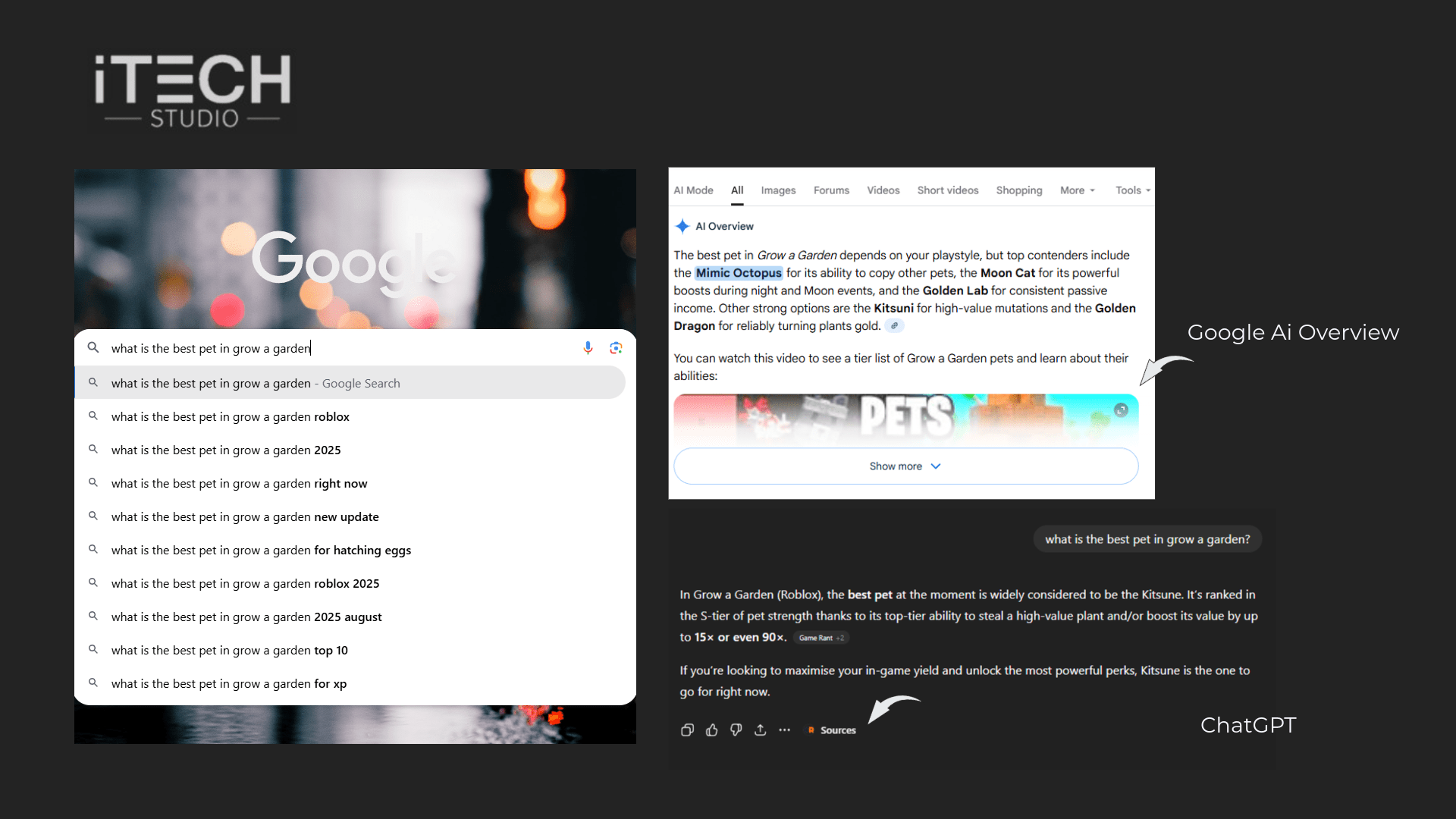
Two figures explain the urgency. 68% of Google searches end without a click, and where AI Overviews appear, click-throughs fall by nearly 60% (SparkToro / Similarweb, 2026). Meanwhile ChatGPT and Gemini answer hundreds of millions of questions a week – buying decisions increasingly start inside the answer, not on a results page.
What GEO is not
GEO is not keyword stuffing for chatbots, and it’s not a replacement for SEO – the two share most of their foundations. It’s also not a one-off task: models and retrieval indexes refresh, so visibility has to be measured and maintained month by month. Anyone promising a permanent ChatGPT ranking is selling something that doesn’t exist.
How to check your own AI visibility
Run a free ApexIntent scan (apexintent.ai): it asks buyer-intent questions across 7 AI platforms and returns a GEO score, mention rate, framing and an action plan. We built ApexIntent in-house precisely because we couldn’t answer “does AI recommend us?” with any existing tool. Then see our GEO service for how we act on the results.
Frequently asked questions
Is GEO the same as AEO or AI SEO?
AEO (answer engine optimisation) targets featured snippets and voice answers; “AI SEO” is a marketing label. GEO specifically targets generative answers – the techniques overlap heavily.
Does GEO work for small businesses in Singapore?
Yes – AI engines favour clear, specific, local entities, and a focused SME page often beats a generic enterprise page.
How long does GEO take?
Structural fixes take days; mention changes take weeks to months. Measure monthly.
Which comes first, SEO or GEO?
Fix technical SEO first so your site can be crawled and trusted, then layer GEO content and entity work on top. See our SEO service.
