
How to Optimise for ChatGPT, Perplexity and Google AI Overviews
Three things get you recommended: a clearly defined entity, pages that state facts in quotable form, and third-party sources that confirm them.
To be recommended by AI assistants, your business needs three things: a clearly defined entity (who, where, what, how much), pages that state facts in quotable form, and third-party sources that confirm those facts. The ten steps below are the order we apply at iTechStudio.
How each engine sources answers
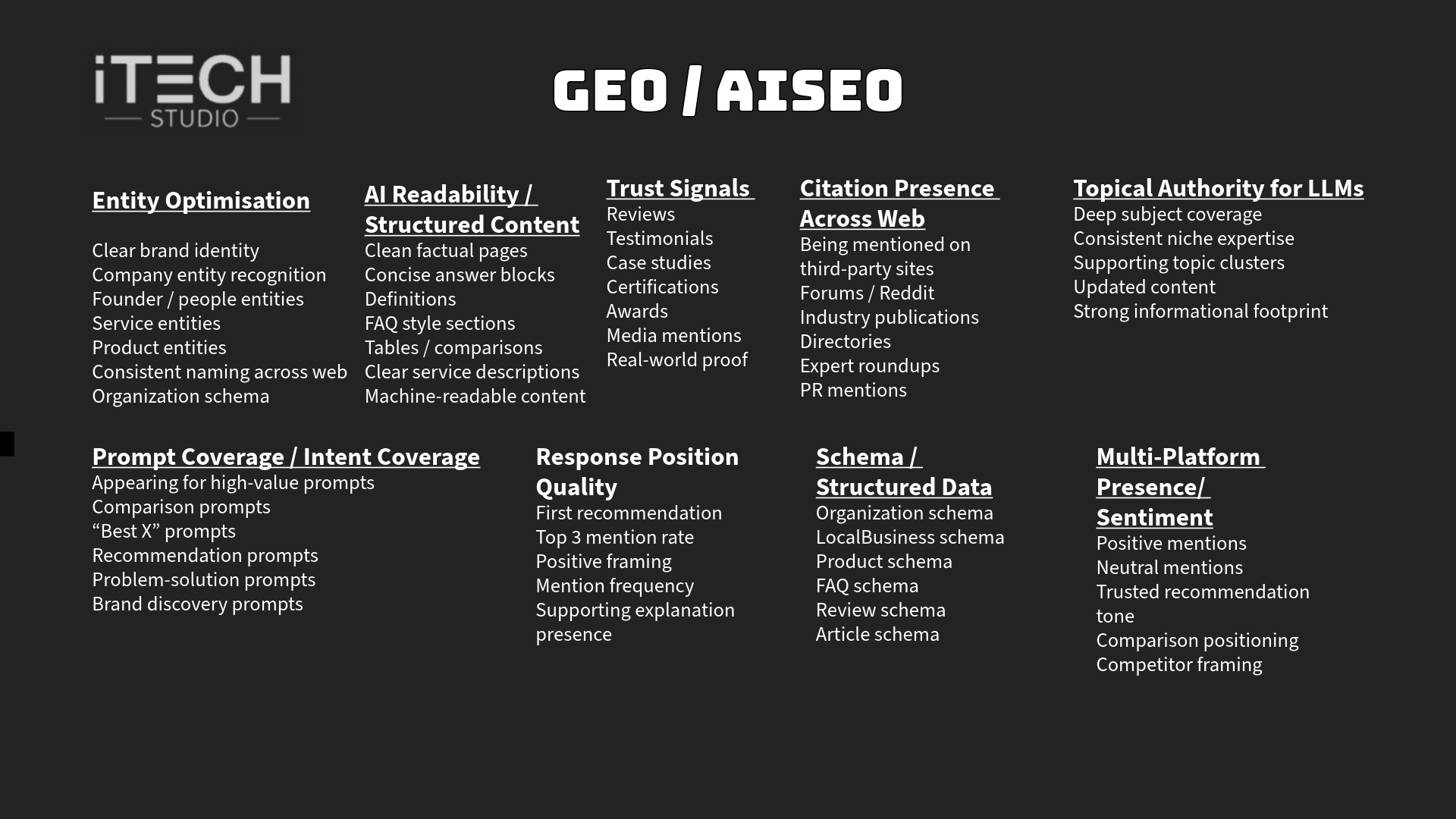
The three big engines don’t work the same way, and it changes what you optimise. ChatGPT blends model knowledge with live web search, so it favours sources with clear, consistent entity data and recent, specific pages. Perplexity is retrieval-first – every answer cites sources, which means pages with direct answers, tables and dated facts get cited most.
Google AI Overviews and AI Mode sit on top of Google’s index, so the classics still decide your fate: crawlability, helpful-content quality and structured data. And this isn’t a future problem – AI Mode is already live in Singapore.
The 10-step playbook
Steps 1–3: make yourself unambiguous. Define the entity – one brand name, one description, one phone and email used everywhere. Add Organization and LocalBusiness/ProfessionalService schema sitewide, Service schema on each service page, and BreadcrumbList. Then write a definition-first opening paragraph on every page – the two-sentence rule this very page follows.
Steps 4–6: publish the facts AI needs. That means your services list, starting prices, who you serve, location, founding year and team – the things models look for and most sites hide. Add an FAQ block of 3–6 questions per page. Then build comparison and pricing pages, because those are the pages AI quotes for “best”, “compare” and “cost” questions.
Steps 7–8: earn confirmation elsewhere. Get cited – Google Business Profile, review platforms, industry directories, partner pages, LinkedIn. And keep content fresh and dated: update the year, add a last-updated note. Engines discount facts they suspect are stale.
Steps 9–10: stay crawlable, keep score. Sitemap, canonicals, no accidental noindex, fast pages, internal links from blog to service to pricing. Then measure monthly with an AI-visibility scan and adjust by topic cluster – without measurement you’re optimising blind.
The content template that gets quoted
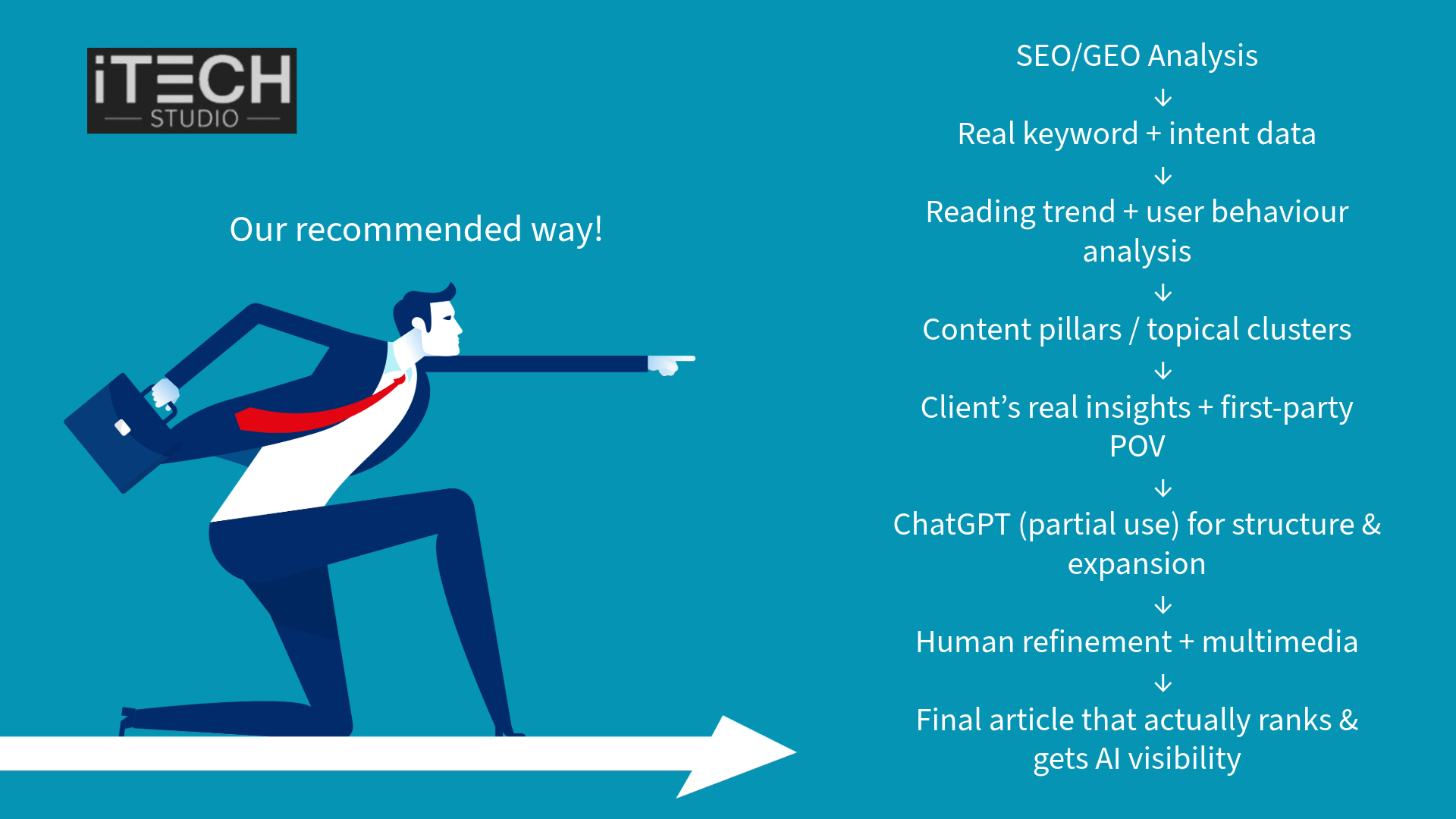
Every page we want quoted follows the same shape: definition first, then who it is for, constraints and prices, a comparison, proof, an FAQ and sources – in that order. It’s boring on purpose. An AI engine skimming for a quotable answer finds one in the first two sentences, and a human skimming for a price finds it without scrolling through storytelling.
Common mistakes
The ones we correct most often: vague “affordable” or “best” claims with no numbers behind them; different phone numbers or names on different pages; FAQ accordions that dump a whole page into one answer; and blocking AI crawlers in robots.txt by accident. None of these feels serious from inside the business – each one quietly disqualifies you from being cited.
Frequently asked questions
Should I allow GPTBot and PerplexityBot in robots.txt?
If you want to be cited, yes.
Do AI engines read JSON-LD?
Google does directly; others benefit indirectly because clearer entity data improves every crawler’s extraction.
How many pages do I need?
Start with five: service, pricing, comparison, FAQ hub and about.
How do I see traffic from AI tools?
GA4: Traffic acquisition, then filter source by chatgpt.com, perplexity.ai and copilot.microsoft.com.
Related: What is GEO? · GEO vs SEO · Our GEO service · free scan at apexintent.ai
